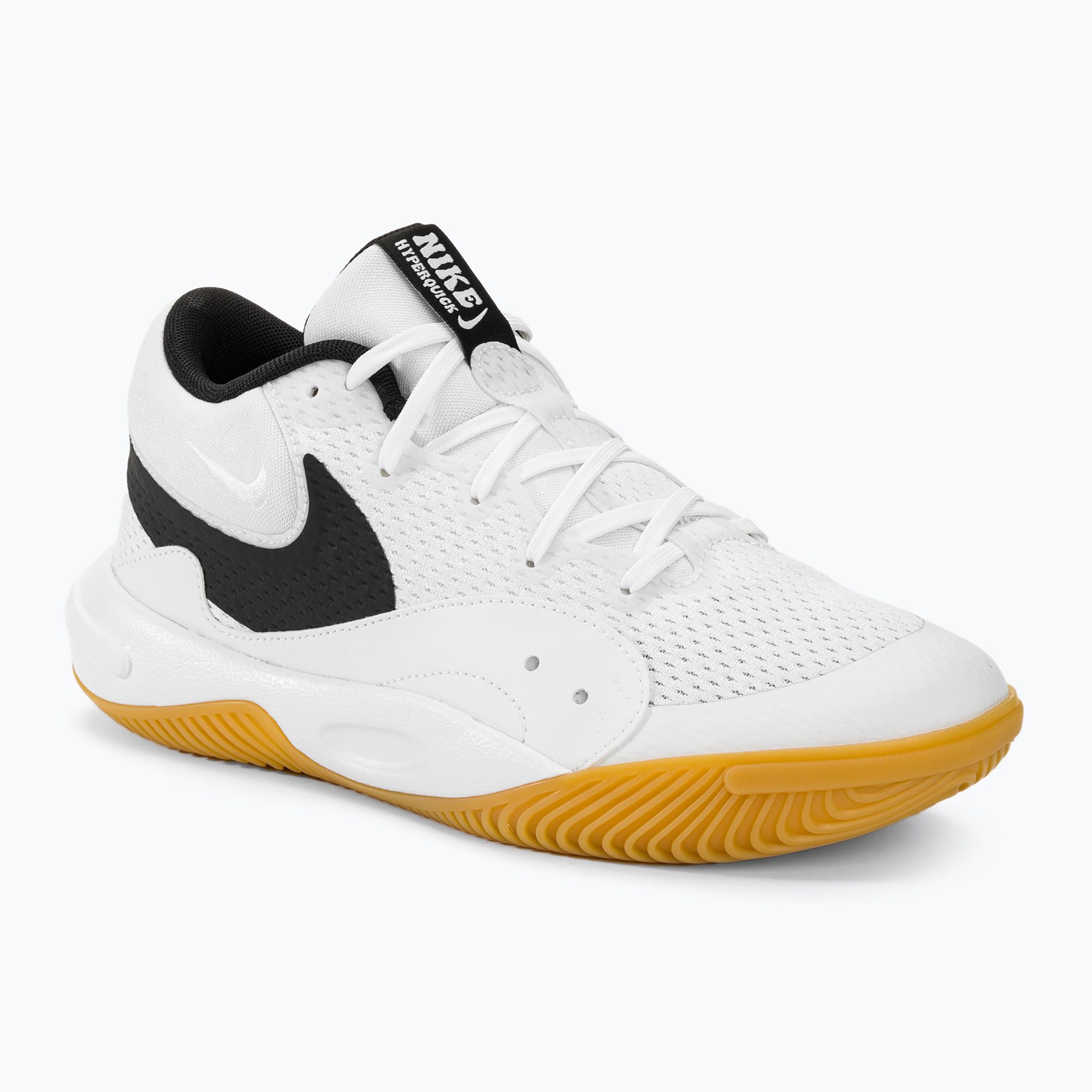
QUICK ANSWERChoose volleyball shoes in this order: correct audience and width, secure heel and midfoot fit, indoor traction, stable lateral movement, then cushioning matched to your position and workload. Brand, collar height and color are useful final filters, not the starting point.
WHAT THIS GUIDE SOLVESGive first-time and returning shoppers a repeatable sequence for choosing fit, role, traction and cushioning.
As an Amazon Associate, we may earn from qualifying purchases.
Define your non-negotiable fit
Measure both feet and use the larger measurement as the starting point. Check whether the listed scale is women's, men's, youth or unisex, then consult brand-specific information rather than assuming the same number fits across every model. The forefoot should have room to spread during landing while the heel remains controlled.
Include normal volleyball socks, braces and removable insoles in the fit test. Do not size up merely to escape a narrow shape if the extra length creates heel movement. A dedicated wide option or a different model shape is usually the cleaner solution.
Match movement and cushioning
Defensive players often favor shoes that feel light and close to the court for rapid braking and coverage. Setters commonly need a balanced combination of response, lateral stability and moderate cushioning. Frequent hitters and blockers should pay special attention to stable landings and cushioning that remains controlled under repeated load.
More softness is not automatically more protection. A shoe that compresses unpredictably or allows the foot to roll over the platform can feel unstable. Compare how the shoe controls movement along with how comfortable it feels standing still.
COMPARE CURRENT OPTIONSSee volleyball shoes available now
Compare current models, sizes and colorways, then confirm the exact version and seller details on Amazon before purchasing.
Browse current options on Amazon ↗ Evaluate construction, not collar marketing
Look at heel hold, lacing coverage, sidewall containment and the width of the outsole platform. Those features influence security throughout a cut or landing. Low, mid and high cuts change upper coverage and feel, but no collar style can guarantee ankle-injury prevention.
On a safe indoor surface, test controlled shuffles, stops, approach steps and small landings. Reject a model if the foot slides, the heel lifts, the toes strike the end or the platform feels unstable. A brief fit test reveals more than a long feature list.
Use price and style to choose among finalists
After two or three models meet the fit and performance requirements, compare current price, color and availability. Entry shoes can be sound choices for beginners; performance and premium shoes should earn their added cost through features that serve your actual schedule. Amazon inventory varies, so verify the exact size, generation and seller on the live listing.
Keep the final decision simple: select the secure shoe you can move confidently in and reserve it for the court. If no candidate passes the fit test, restart with a different model shape instead of accepting a painful or loose compromise.
Frequently asked questions
Should volleyball shoes be a half size bigger?
Not by default. Use measurements and the model's sizing information, leaving functional toe room without creating heel slip.
Are low tops or high tops better for volleyball?
Neither cut is universally better. Fit, heel hold, platform stability and the player's movement preference matter more than collar height alone.
What cushioning is best for a hitter?
Look for controlled impact protection and a stable landing platform. The best amount depends on fit, body mechanics and how frequently the player jumps.
Can beginners use entry-level volleyball shoes?
Yes, when the shoe fits securely and provides suitable indoor grip and lateral stability. Beginners do not automatically need premium technology.
Should color affect the choice?
Use color only after the correct model and size are established. Performance and fit should not be sacrificed for a specific colorway.
Final verdict
Choose volleyball shoes in this order: correct audience and width, secure heel and midfoot fit, indoor traction, stable lateral movement, then cushioning matched to your position and workload. Brand, collar height and color are useful final filters, not the starting point. Use the linked collection and model profiles to narrow the shortlist, then let secure fit and predictable court movement decide the final pair.