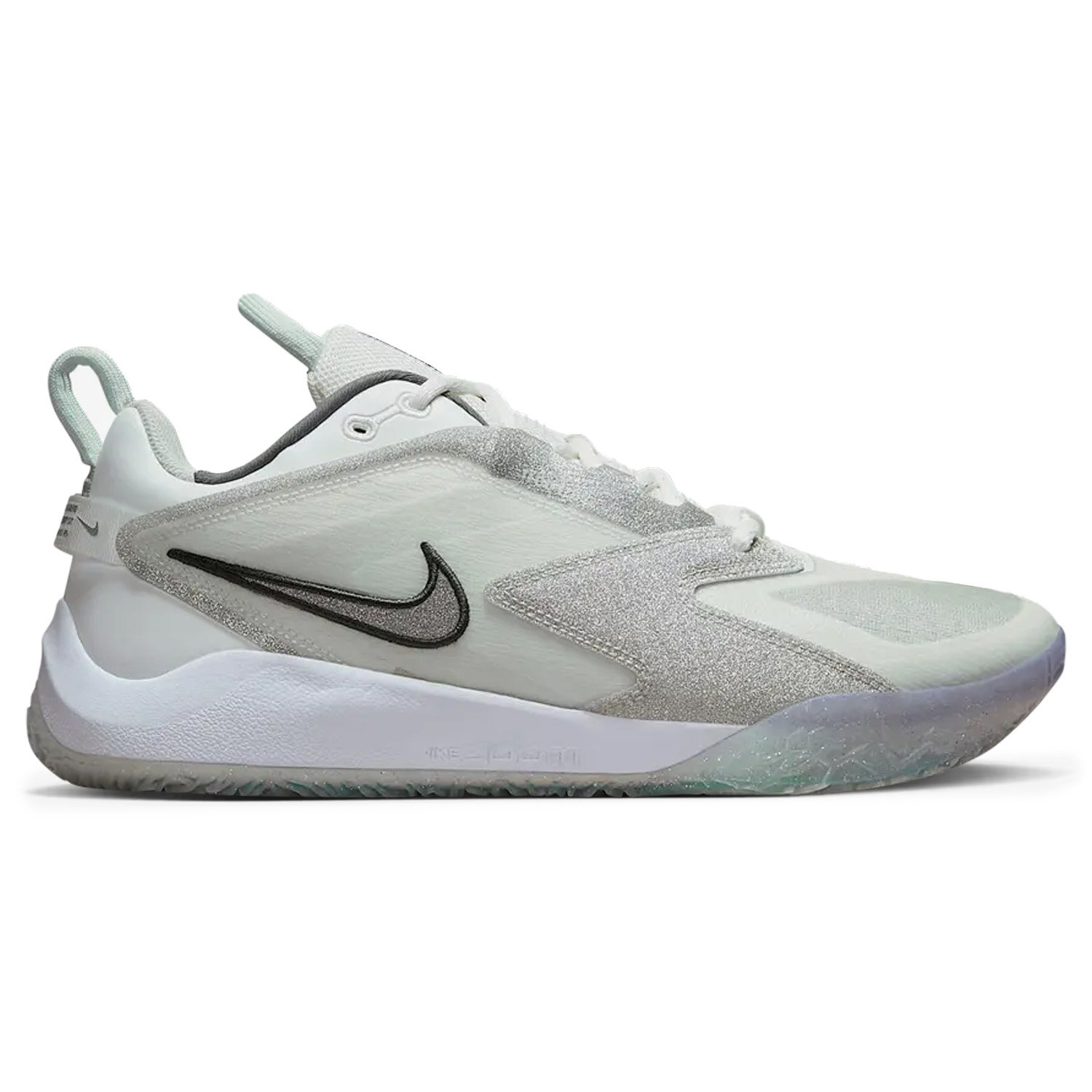
QUICK ANSWERDedicated volleyball shoes usually feel lighter and more court-specific, while basketball shoes offer a wider range of cushioning, cuts, and platform shapes. Either category can work indoors when the individual model has reliable grip, lateral stability, secure fit, and manageable weight.
WHAT THIS GUIDE SOLVESCompare dedicated volleyball and basketball shoes feature by feature so a player can choose for a specific role and preference.
As an Amazon Associate, we may earn from qualifying purchases.
Traction and movement profile
Both categories are designed for hardwood movement, but volleyball shoes concentrate on quick shuffles, short approaches, and repeated transitions near the net. Basketball designs must also accommodate longer runs, pivots, and varied player roles, so their outsole geometry can differ more widely.
Neither label guarantees grip. Court dust, outsole compound, tread wear, and whether the shoe has been used outdoors all influence real-world traction.
Weight, cushioning, and court feel
Volleyball lines often separate light speed models from more cushioned jump models. Basketball offers the same broad spectrum, but some pairs use taller foam stacks or heavier uppers that can feel cumbersome during volleyball defense.
Softness should not be confused with protection. Players need cushioning that compresses predictably over a stable base, allowing them to land and move again without feeling delayed or unbalanced.
COMPARE CURRENT OPTIONSSee volleyball shoes available now
Compare current models, sizes and colorways, then confirm the exact version and seller details on Amazon before purchasing.
Browse current options on Amazon ↗ How to choose between them
Choose the actual shoe, not the sport printed on the box. A libero may value a low-profile volleyball model, while a high-volume hitter may prefer either a jump-focused volleyball shoe or a stable basketball crossover.
Compare both pairs in the same socks and rehearse lateral stops, approach steps, and landings. Keep the option that holds the heel, leaves functional toe room, and feels predictable at the edges of the platform.
Frequently asked questions
Which category has better grip?
Neither category always wins. Indoor-oriented models from both can grip well; outsole cleanliness, compound, floor condition, and wear determine the result.
Are basketball shoes too heavy for volleyball?
Some are, especially for players who favor a minimal feel, but many modern basketball shoes have manageable weight. Evaluate the specific pair during volleyball movements.
Are volleyball shoes better for jumping?
Jump-focused volleyball shoes are built for repeated takeoffs and landings, but they do not automatically increase vertical height. Stable cushioning and secure fit are the practical advantages.
Which shoes are better for setters?
Setters often benefit from balanced cushioning and quick multi-direction control. Suitable models exist in both categories, though dedicated court shoes make that profile easier to identify.
Can one pair be used for both sports?
Yes, if it fits both workloads and stays clean for indoor use. Faster outsole wear and different movement preferences may make separate pairs worthwhile for frequent players.
Final verdict
Dedicated volleyball shoes usually feel lighter and more court-specific, while basketball shoes offer a wider range of cushioning, cuts, and platform shapes. Either category can work indoors when the individual model has reliable grip, lateral stability, secure fit, and manageable weight. Use the linked collection and model profiles to narrow the shortlist, then let secure fit and predictable court movement decide the final pair.